North Carolina’s commercial buildings endure hot, humid summers, pounding storms, and everything in between. For many business owners – from manufacturing plants and warehouses to large churches – roof maintenance is a constant concern. Roof coatings have emerged as a popular solution to extend roof life, stop leaks, and slash energy bills. But what is the truth about roof coatings? Are they really worth it for North Carolina businesses? In this educational post, we’ll cut through the hype and examine the facts, benefits, and real case studies of roof coating systems (with a focus on Conklin products) in the Tar Heel State.

Understanding Roof Coatings (and Why They’re Different)

Roof coatings are fluid-applied membranes that cover your existing roof with a seamless, waterproof layer. Unlike a simple coat of paint, quality coatings (such as acrylic or silicone elastomerics and spray polyurethane foam systems) form a durable shield that adheres to the roof surface. Conklin – an industry leader that introduced the first acrylic commercial roof coating in 1977 – specializes in these high-performance coatings. Today’s roof coating systems are often bright white “cool roofs,” meaning they reflect sunlight instead of absorbing it. In fact, Conklin’s white roof products reflect 85% or more of the sun’s radiant heat, drastically reducing the surface temperature of your roof on a blistering day.

How do roof coatings work? Essentially, a professional roofer cleans and preps your existing roof, then sprays or rolls on layers of the coating system. Some systems include reinforcing fabric or foam insulation layers for extra strength and R-value. The result is a monolithic (seam-free) membrane that seals every crack, seam, and penetration on the roof. This seamless barrier keeps water out and prevents the small leaks that often plague aging flat roofs. It also expands and contracts with temperature changes (important in a climate with 90°F summer days and frosty winter nights) to maintain a tight seal year-round. Importantly for North Carolina businesses, many of these roof coatings (like Conklin’s Benchmark® and Rapid Roof®) are ENERGY STAR® certified and meet strict building codes for reflectivity and fire resistance.

Bottom line: A roof coating is not a temporary band-aid, but rather an advanced roofing restoration system. When installed by trained contractors, these coatings essentially create a new roof surface over your old roof – one that is bright white, highly reflective, and built to last. Let’s explore why this matters so much for commercial building owners in North Carolina.

Key Benefits of Roof Coatings for NC Commercial Buildings

Roof coatings have been touted to save money and solve roofing problems – and the data shows these claims aren’t just marketing. Here are several eye-opening benefits of roof coatings (especially Conklin systems) that demonstrate why they can be worth the investment for North Carolina businesses:

  • Significant Energy Savings: By turning your roof from dark to white, coatings dramatically reduce heat absorption. Studies have found that “cool” roofs can lower roof surface temperatures by up to 40% during the hottest weather. For example, a black asphalt roof on a 90°F day can reach 160–180°F, whereas a Conklin white-coated roof stays around 100°F. This means less heat is transferred into your building – so your AC doesn’t have to work as hard. The U.S. Department of Energy and case studies confirm that cooling costs drop significantly after installing reflective roof coatings. In one real-world demonstration, businesses saw an average 25% reduction in cooling energy use, with some buildings saving nearly 50% on summer cooling after a white coating was applied. Even right here in North Carolina, a manufacturing facility in Lexington reported a 15% reduction in air conditioning costs after applying a Conklin acrylic roof coating, thanks to the coating’s reflectivity. These energy savings not only cut monthly utility bills but also improve interior comfort for employees and customers.
  • Lower Costs than Roof Replacement: Opting for a coating restoration can be much easier on your budget than a full tear-off and new roof. On average, roof coatings cost 30–70% less than a traditional roof replacement. This is a huge consideration for cost-conscious organizations like warehouses, factories, and churches with limited capital for building repairs. With a coating system, you avoid the high labor and material expenses of ripping off the old roof. There’s also minimal disruption – no loud demolition or weeks-long construction project. In most cases, the coating can be applied directly over the existing roof without interrupting your daily operations. Business owners can literally keep the doors open and revenue flowing during the process. Considering the average commercial roof replacement can run $5 to $10 (or more) per square foot, versus a fraction of that for a coating, the savings are substantial. Several building owners have found that a quality coating “paid for itself” in energy savings within 5–7 years – meaning the reduction in utility costs essentially covered the installation cost. In extreme cases, some have broken even in as little as 4.5 years. After that breakeven point, the ongoing energy and maintenance savings are money in your pocket.
  • Extended Roof Lifespan & Durability: Roof coatings don’t just reduce energy usage; they also extend the life of your roof. By covering the old roof with a protective layer, you shield it from UV degradation, thermal expansion, and water damage. Conklin’s elastomeric coatings are known to add 10, 20, or even more years of life to an aging roof. Many come with renewable warranties of 10–18 years – meaning that at the end of the warranty period, you can recoat the roof again to renew the protection (instead of ever having to do a costly tear-off). With proper maintenance and periodic recoating, some coated roofs have indefinite longevity. For instance, Conklin’s very first acrylic roof installations in the late 1970s lasted for decades. One notable project in Arizona stayed leak-free for over 30 years with only minimal maintenance! Even after decades of sun and storms, the original coating was still performing when the roof was finally recoated. Other documented cases include a metal roof in Kansas that has 23 years leak-free (and counting) after a Conklin restoration. The durability is also evident in harsh conditions – these systems can withstand hurricane-force winds and large hail impacts (many Conklin coatings carry a Class 4 hail rating, the highest available). For North Carolina, which sees everything from tropical storms on the coast to hail in the Piedmont, that kind of resilience is invaluable. A coated roof can handle thermal shock (rapid temperature swings), high UV index, and storm abuse without cracking – preserving the integrity of your building.
  • Leak Prevention and Waterproofing: If roof leaks are a recurring headache, a coating can be a game-changer. Because the coating forms a continuous seamless membrane, it seals all the tiny seams, fastener holes, and imperfections where water usually finds its way in. Think of it as wrapping your entire roof in a waterproof blanket. In practice, this has saved many businesses from leak damage. As mentioned, a Lexington, NC manufacturing facility that was plagued by recurring leaks solved the issue by installing a Conklin acrylic coating – they reported zero leaks even through heavy storms in the two years following the installation. The peace of mind that comes from a dry interior (protecting your inventory, equipment, or congregation) cannot be overstated. And unlike some quick patch jobs, a properly installed coating eliminates leaks long-term rather than just temporarily plugging them. (Of course, regular inspections are still wise, but the need for frequent repairs drops dramatically.)
  • Energy Efficiency Year-Round: We’ve highlighted summer cooling savings, but what about winter? In North Carolina, winters are relatively mild but can still get chilly. Certain roof coating systems (especially spray polyurethane foam with reflective top coats) provide insulation value as well. Spray foam roofs have high R-value (around 6.5 per inch) – the highest of any roofing insulation – which means they help keep heat inside your building during winter. Conklin’s foam and fabric-reinforced systems effectively insulate and seal the roof, reducing heat loss in cold weather and minimizing drafts. So while the white topcoat shines in summer, the foam layer beneath can trim heating costs in winter. The result is a more energy-efficient building year-round, an important factor for manufacturing facilities or churches that want to reduce utility expenses every month.
  • Sustainability & Environmental Benefits: Roof coatings are also an environmentally responsible choice – a fact that often aligns with corporate sustainability goals and church stewardship values. By restoring your roof instead of replacing it, you keep tons of old roofing material out of landfills. There’s no need to discard piles of torn-off shingles, metal, or membrane; the coating goes right over the existing roof. This green aspect is more than feel-good trivia: avoiding tear-off not only saves landfill space, it also avoids additional disposal fees and labor. Moreover, cool roofs help combat the urban heat island effect by lowering the ambient air temperature around your building. Using less energy for air conditioning also means reducing your carbon footprint and air pollution. Many business owners appreciate that a Conklin “green” roof coating lets them improve their building’s performance while also doing the right thing for the environment. It’s a win-win that can even contribute to LEED points or energy incentive programs if applicable.

These benefits make a compelling case that roof coatings are indeed “worth it” for many commercial buildings in NC. But nothing speaks louder than real-world results – so let’s look at some actual outcomes and testimonials from using Conklin roof systems.

Real Results: Case Studies from North Carolina and Beyond

To truly understand the value of roof coatings, it helps to see them in action. Fortunately, there are plenty of success stories. We’ve already noted a few, but here’s a closer look at how Conklin roof coatings have delivered for businesses, including those right here in North Carolina:

  • Manufacturing Facility in Lexington, NC: This 10,000 sq. ft. facility had an aging flat roof with chronic leaks. The owners partnered with a Conklin contractor to restore the roof instead of replacing it. They applied a Conklin acrylic elastomeric coating across the entire surface. The result? No more leaks – even after two years of heavy rain and storms – and a 15% reduction in cooling costs due to the roof’s new reflectivity. What had been a constant maintenance nightmare is now a leak-free, energy-saving roof. The plant managers were particularly pleased to avoid interrupting their production schedule; the restoration was done with virtually no downtime for their operations.
  • Energy Savings Study (Multiple Commercial Buildings): Conklin often points to a study where a group of retail buildings had white reflective coatings installed to measure energy impact. The outcome was remarkable: an average 25.3% drop in cooling energy usage across the properties, with individual buildings seeing energy savings ranging from 13% on the low end up to 48% on the high end. This demonstrates how dramatic the cooling cost reduction can be, especially for buildings that previously had dark, heat-absorbing roofs. While this study wasn’t exclusive to North Carolina, the hot, sunny summers in NC mean local buildings can achieve similar benefits from cool roofs.
  • Decades-Long Performance Records: Conklin’s track record provides confidence that these systems hold up over time. For example, a Conklin-coated roof on a commercial property in Arizona stayed watertight for 30+ years – outlasting the building’s traditional shingle roof which had to be replaced twice in the same period. And on the East Coast, a manufacturing facility in Delaware had two large sections of roof sprayed with Conklin foam; after 20 years, those sections were still trouble-free and were simply re-coated to renew the warranty. These cases underline a crucial point: a well-maintained coating system can provide long-term protection and eliminate the need for multiple roof replacements over a building’s life. Many North Carolina businesses aim to invest in capital improvements that truly last – roof coatings fit that bill when done right.
  • Trusted by Major Companies: If you’re still unsure about the credibility of roof coatings, consider this: many high-profile companies and institutions have chosen Conklin roofing systems to protect their facilities. The list includes familiar names like Holiday Inn, Marriott, Burger King, Honeywell, John Deere, Lockheed Martin, and McDonald’s, among others. These organizations demand results, and they have the resources to choose any roofing solution – the fact that they opted for Conklin’s coated systems speaks volumes. Whether it’s a hotel in Charlotte or a food processing plant in eastern NC, businesses large and small have seen the payoff from modern roof restoration.

Of course, every roof is unique. Results will vary based on factors like the condition of your existing roof, the type of coating system used (acrylic, silicone, spray foam, fabric-reinforced, etc.), and the quality of installation. That’s why the first step is a thorough professional evaluation of your roof’s health. Still, the pattern is clear: when a roof is a good candidate for coating, the benefits can be substantial – especially for commercial buildings in a climate like North Carolina’s.

Conclusion: A Smart Investment for North Carolina Commercial Roofs

So, are roof coatings worth it for North Carolina businesses? For many building owners, the answer is a resounding yes. The truth is that a high-quality roof coating system can transform an aging, inefficient roof into a durable, energy-saving asset. Instead of viewing your roof as a liability waiting for the next leak or expensive replacement, you can restore it and gain tangible advantages:

  • Savings: Lower utility bills and avoided replacement costs improve your bottom line.
  • Longevity: A coated roof lasts longer and stays watertight, protecting your assets and operations.
  • Sustainability: You’ll reduce waste and energy consumption, which is good for business and the environment.

The key is to use proven products (like Conklin’s nationally recognized roof coatings) and experienced contractors who know how to apply them correctly for our North Carolina climate. When those boxes are checked, roof coatings are not just a stop-gap measure – they are a long-term roofing investment that can pay for itself and then some.

Get Your Free Roof Health Evaluation

Interested in seeing what a roof coating could do for your commercial building in North Carolina? The best next step is to get a professional assessment of your roof’s condition and potential for restoration. Contact us today for a free roof health evaluation. Our team will inspect your roof and provide honest guidance on whether a Conklin roofing system is the right solution for you. Don’t wait until the next leak or sky-high energy bill catches you off guard – take a proactive step now to protect your roof, your budget, and your business. We’re here to help North Carolina business owners discover the lasting value of roof coatings – and we’re just a phone call away!

Contact us for your free roof evaluation and let us help you extend the life of your roof while saving you money. Your roof (and your wallet) will thank you!

Share This Post

  • Leaky Seams and Fasteners: Metal roofs often develop leaks around panel seams and screw holes as the roof ages. Solution: Our Conklin® metal roof restoration system seals every seam and fastener, creating a fully waterproof barrier that stops leaks in their tracks.
  • Rust and Corrosion: North Carolina’s humidity and storms can lead to rust patches on metal panels, weakening the roof. Solution: We use Conklin’s rust-inhibiting primers and coatings to remove existing rust and prevent future corrosion, restoring the roof’s structural integrity.
  • High Energy Costs: An aging metal roof loses its reflective finish, causing your building to overheat in summer. Solution: Our bright white Conklin roof coatings reflect up to 85% of the sun’s heat, dramatically reducing roof temperatures and cooling costs.
  • Costly Replacements: Full roof replacement is expensive and disruptive to your business. Solution: Our restoration system renews your metal roof at a fraction of the cost and time of replacement, with minimal disruption to your operations.

Metal roofs are incredibly durable and are built to last for decades. They stand up to sun, wind, rain, and even snow. However, even the toughest metal roof will eventually experience wear and tear. If you own or manage a commercial building in North Carolina, you might start noticing problems like leaks around fasteners, rust spots, or higher indoor temperatures. Your first thought might be that you’ll need an expensive complete roof replacement. Good news: roof restoration can often solve these issues at a much lower cost and extend the life of your roof. In fact, using a high-quality system like Conklin’s Metal Roof Restoration (MR) System, we can stop leaks, inhibit rust, and add years of service life to your metal roof. This blog will educate you on why metal roofs need restoration, how the Conklin restoration process works, when a metal roof can (or cannot) be restored, and why Nisley Commercial Roofing’s solution can relieve your metal roof headaches in North Carolina.

Common Issues with Aging Metal Roofs

Over time, a once-perfect metal roof can develop a variety of issues. While it may look solid from the ground, years of exposure to the elements cause subtle damage that worsens if ignored. Here are the most common pain points we see on aging metal roofs:

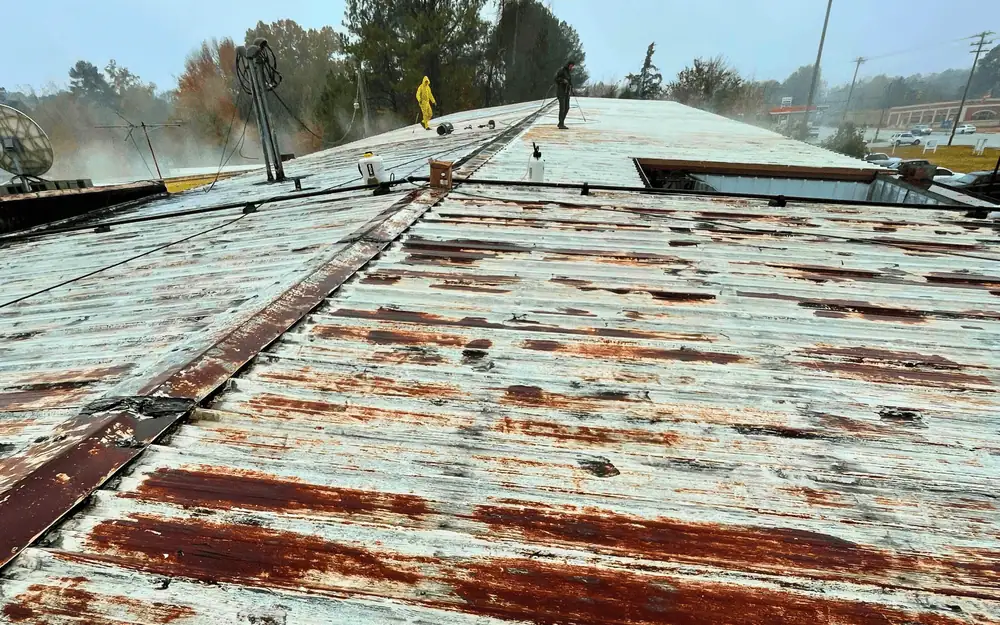
  • Rust and Corrosion: Prolonged exposure to moisture (from rain, humidity, or standing water) triggers oxidation of the metal panels, leading to rust. Rust not only looks unsightly with its reddish-brown patches, but it also eats away at the metal, thinning it and compromising the roof’s structural integrity. If left unaddressed, rust can create holes in the metal and cause leaks, potentially damaging the underlying structure and interior of the building.
  • Loose or Failing Fasteners: Metal roof panels are secured with dozens (even hundreds) of screws and bolts. With North Carolina’s temperature swings—hot days and cool nights—metal expands and contracts, a phenomenon known as thermal movement. Over the years, this constant movement can loosen fasteners or even cause them to back out. A loose fastener leaves a small hole or gap, which is all that water needs to start seeping in. Eventually, you may notice leaks around these fastener points or see screws on the roof that have worked their way out.
  • Leaky Panel Seams: Metal roofs are made of multiple panels joined together, usually with overlapping seams. Those seam areas are vulnerable points. Old sealants can crack or fail, and panels can shift slightly due to wind or thermal expansion. The result is often gaps or cracks at seams where water finds its way through. If you’ve ever dealt with a drip during a rainstorm, there’s a good chance a seam leak was the culprit.
  • Faded or Chalky Coatings (Reduced Reflectivity): Many commercial metal roofs are coated with a factory finish or paint that is designed to reflect sunlight (often a light color or white coating). Over years, UV exposure and weather will cause that finish to fade, chalk, or accumulate dirt, reducing its reflective properties. A dull, darkened metal roof absorbs more solar heat. This means higher roof temperatures and more heat transfer into the building – driving up your cooling costs and making your HVAC system work harder. A less reflective roof also indicates the protective coating is aging, which could expose the bare metal to elements once the coating wears off.

Ignoring these issues can lead to more serious problems down the line, including interior water damage, mold growth, insulation deterioration, and even structural risks if rust spreads too far. The sooner you address metal roof problems, the better. That’s where restoration comes in as a smart, proactive solution.

Why Restore Instead of Replace?

When faced with an aging or leaking metal roof, many owners instinctively think a full replacement is the only fix. While replacement is necessary in some extreme cases (more on that later), metal roof restoration offers compelling advantages over tearing off and installing a new roof. Here’s why restoration is often the smarter choice:

  • Significant Cost Savings: Roof replacement is a major capital expense – it requires paying for removal and disposal of the old metal, purchasing all new roofing materials, and extensive labor for installation. Restoration, on the other hand, typically costs only a fraction of a full replacement. You reuse the existing roof structure and simply add new protective materials on top. In addition, many metal roof restoration systems (like Conklin’s) can be treated as a maintenance or repair expense, not a capital improvement – meaning you can expense it in the current year instead of depreciating over many years. This accounting benefit can improve your bottom line. Overall, restoration lets you preserve your budget for other business needs while still fixing your roof.
  • Minimal Business Disruption: Think about what’s involved in a full roof replacement – loud demolition, crews tearing off metal panels, possibly exposing the interior to weather during the process, and weeks of work. This can disrupt your operations, force sections of your facility to shut down, and even pose safety risks to occupants or inventory. In contrast, roof restoration is far less invasive and much faster. Our team works primarily on the roof surface, sealing and coating it, often completing the job in days (not weeks). There’s little noise or mess, and your daily business can usually continue uninterrupted. No lost productivity or halted operations – most customers and employees won’t even realize your roof is being worked on.
  • Extended Roof Lifespan: A professionally done metal roof restoration can add 10, 15, even 20 years of life to your existing roof. By resolving the leaks, stopping the rust, and shielding the metal with durable coatings, you essentially reset the clock on your roof’s longevity. In many cases, a roof can be restored more than once as long as it remains structurally sound. This means you might defer an expensive full replacement for decades. Protecting and maintaining your investment in this way provides long-term value – your roof keeps guarding your building without the huge expense of a new roof installation.
  • Improved Energy Efficiency: Restoration often involves applying bright white, highly reflective coatings that bounce away sunlight. By reflecting up to 85% of the sun’s UV and infrared energy, these coatings prevent your metal roof from super-heating under the Carolina sun. The roof stays cooler, which in turn keeps your building interior cooler and eases the load on your air conditioning. Many building owners see a noticeable drop in their utility bills after a Conklin white roof coating is installed. In fact, EnergyStar® roof products have been shown to lower roof surface temperatures by 15–30% and reduce cooling costs accordingly. Over the course of years, those energy savings add up significantly – an often overlooked financial perk of restoration. Plus, a cooler roof means less thermal expansion and contraction stress on the metal, which further extends the roof’s life by reducing the “thermal shock” cycle that can loosen fasteners. It’s a win-win for efficiency and durability.
  • Environmental Benefits: Choosing restoration is also a greener choice. Consider that a full roof replacement means tons of old metal, insulation, fasteners, and packaging for new materials will end up in the landfill. Restoration generates far less waste because the existing roof isn’t torn off. You’re essentially recycling your roof by renewing it. This conserves resources and avoids the environmental impact of manufacturing and transporting a whole new roof. Additionally, by lowering your building’s energy usage (through reflective coatings), you reduce your carbon footprint. In short, roof restoration is a sustainable solution that aligns with modern environmental goals, all while solving your roofing issues.

As you can see, restoring a metal roof can save you money, time, and headaches, all while delivering performance equal to a new roof. It’s always wise to evaluate restoration options before deciding to replace a metal roof that might have some life left in it.

A big rusty roof in North Carolina.

How Does the Metal Roof Restoration Process Work?

You might be wondering “What exactly happens when you restore a metal roof? How do these coatings and repairs work?” At Nisley Commercial Roofing, we follow a meticulous, multi-step process using Conklin roofing products to rejuvenate your metal roof. Here’s a step-by-step look at how we take a rusty, leaky metal roof and transform it into a durable, energy-efficient asset:

  1. Inspection & Preparation: Every restoration begins with a thorough inspection of your roof. We walk the roof to identify any problem areas, such as severely rusted sections, loose panels, or structural issues. This helps confirm that the roof is a good candidate for restoration (and not in need of partial replacement). Once the roof is deemed sound, we prepare the surface by addressing small repairs (tightening or replacing any missing fasteners, for example) and then giving the roof a deep cleaning. This involves removing all dirt, debris, and loose rust. We often use a pressure washer and a specialized cleaner like Conklin’s Rust-Off® solution to strip away rust and oxidation from the metal. By the end of this phase, the metal panels are clean and bare, which is critical for ensuring primers and coatings will adhere properly. (No coating will stick to a dirty or chalky roof for long!) Once washed, the roof is allowed to dry completely. This preparation stage sets the foundation for the rest of the restoration – skipping it or doing it poorly can lead to coating failures, so we take it very seriously.
  2. Apply Rust-Inhibiting Primer: With a clean surface, the next step is to treat any remaining rust and prime the metal for coating. We apply a rust-inhibiting metal primer (such as Conklin’s Encase® Metal Primer) across all panels, especially focusing on areas that had rust. This primer penetrates into the metal, neutralizes existing rust, and lays down a protective base layer that prevents further corrosion. Essentially, it “encapsulates” the metal to stop the oxidation process. Priming also creates an ideal surface for the upcoming coatings to bond with. Skipping primer would be a mistake – the coatings might not stick well to bare metal, and any unseen rust could continue to spread underneath. By using a high-quality primer designed for metal roofs, we ensure the roof is well-“anchored” for the restoration system and that rust won’t rear its ugly head beneath the new coating.
  3. Sealing Seams and Fasteners: Once the primer is cured, we address the most leak-prone areas: seams and fastener penetrations. All the linear seams where metal panels overlap are reinforced with fabric in a bed of acrylic coating. We embed a tough, flexible fabric (such as Conklin SpunFlex® mesh) into a layer of coating that we brush along each seam. This reinforcement is like adding a flexible patch along the entire seam, which strengthens it and ensures no water can slip through. In addition, every exposed screw head or fastener is sealed. We apply a premium caulking or sealant (Conklin’s Kwik Kaulk® or similar) over each fastener to close off that tiny entry point from water intrusion. These steps essentially eliminate the typical leak sources on a metal roof. When done, all seams are now covered by a seamless membrane and all fasteners are waterproofed. This level of detail is what makes the restoration truly effective – we’re not just slapping a coating on; we’re surgically addressing the weak spots that cause leaks.
  4. Apply Reflective Coatings: With the seams and fasteners sealed, we move on to the coating application over the entire roof. We install a base coat and a finish coat of Conklin’s roofing coating, creating a new continuous membrane across the metal roof. Typically, a base coat is rolled or sprayed on first, which the fabric in the seams was already embedded into. Then the final white top coat is applied, which cures into a weatherproof, elastomeric layer over the whole roof surface. The result is a bright white, seamless roof surface that is fully adhered to the metal underneath. This coating serves multiple purposes: it forms a waterproof shield that stops leaks, it protects the metal from UV and the elements, and it delivers the highly reflective, energy-saving properties discussed earlier. Conklin’s top coats are Energy Star® rated and can reflect as much as 85% of sunlight, dramatically reducing heat build-up on the roof. Once this finish coat is in place and cured, your metal roof is no longer an assemblage of panels and fasteners – it is essentially a single, monolithic roof surface with no exposed seams or gaps. It’s like we wrapped your entire roof in a durable, rubber-like blanket that is fully weatherproof.

After these steps, your metal roof is fully restored. It will look like a new roof (typically white or light-colored), and it will behave like a new roof – no leaks, no rust issues, and a high reflectivity surface. We often say that a restored metal roof with Conklin coatings is better than a new metal roof, because it solves the inherent design flaw of exposed seams and fasteners that new metal roofs have. The entire restoration process can usually be completed with minimal disruption to your facility’s routine, and we don’t need to tear off your existing roof at all.

When Should a Metal Roof Be Replaced Instead?

Roof restoration is a fantastic option in most cases, but we’d be remiss not to mention that sometimes replacement is the only viable path. How do you know the difference? As part of any professional roof evaluation, the contractor should determine if your metal roof is structurally capable of being restored. If we find any of the following conditions, a full or partial roof replacement might be recommended instead of (or before) a restoration:

  • Severe Structural Deterioration: If the metal panels have rusted completely through in many areas or if the rust has compromised the structural supports (purlins or decking), the roof may no longer be structurally sound. A restoration coating cannot fix metal that’s rusted to the point of weakness or holes. For example, if walking on the roof feels spongy or panels flex underfoot, that’s a bad sign. In such cases, those weakened sections of metal must be replaced. A restoration is only as good as the substrate it’s applied to – if the metal is crumbling, a coating won’t save it.
  • Extensive Leaks at Flashings or Penetrations: Certain areas like the intersection between the roof and walls, skylights, curbs, or other penetrations have flashings that can fail. If critical flashings are badly installed or damaged to the point they can’t be sealed, a restoration alone may not cure the leaks. Similarly, if there are additions on the roof (HVAC units, etc.) with complex curbs that have leaked for years, the underlying materials could be rotted. We may need to remove and properly rebuild some of those flashing areas or replace sections around them before a restoration overlay. Basically, any active leak sources must be addressed – a coating is not a band-aid for major design flaws or broken components.
  • Major Panel Damage or Finish Failure: If the metal roof’s factory finish is almost entirely gone, with widespread rust, large areas of flaking paint, or many panels bent and damaged, it could indicate that the roof is at end-of-life. A coating could adhere poorly to heavily deteriorated surfaces. Additionally, if a significant number of panels are physically damaged (e.g. hail-dented, torn at seams, etc.), it might be more practical to replace those panels or the whole roof. Restoration works best on a metal roof that, despite some issues, is fundamentally intact and securely attached. If over 25–30% of the roof panels are in bad shape, a replacement may be more cost-effective in the long run.

Ultimately, the decision comes down to a careful inspection and honest assessment of the roof’s condition. At Nisley Commercial Roofing, we will always recommend what’s best for the customer. Our philosophy is to restore when feasible, but not to cut corners if a roof truly needs replacement. If your roof falls in a gray area – some parts are good, others are beyond repair – we might do a hybrid approach (replace certain sections or panels, then restore the rest). The good news is, most metal roofs can be restored. We just make sure to verify that before proceeding. If we encounter the above red flags, we’ll let you know and discuss the next steps, which could involve targeted repairs or a new roof.

Request a Free Roof Evaluation

Metal roof restoration can resolve the headaches of leaks, rust, and high energy bills without the cost and hassle of a full replacement. The Conklin metal roof coating system provides a proven way to breathe new life into your roof – stopping leaks, extending its lifespan, and improving energy efficiency. If you’re a commercial building owner or facility manager in North Carolina dealing with metal roof problems, Nisley Commercial Roofing is here to help. We specialize in restoring aging metal roofs and have years of experience using the Conklin MR System to deliver like-new performance to our clients’ roofs.

Don’t let a leaky or rusted metal roof jeopardize your operations or your budget. Contact Nisley Commercial Roofing for a free, no-obligation roof evaluation. We’ll inspect your metal roof, explain its condition, and let you know if restoration is a viable solution. Our experts will provide an honest assessment and guide you through the options – whether that’s a cost-saving restoration or, if necessary, a replacement. We take pride in solving North Carolina business owners’ metal roof pain points with reliable, high-quality workmanship.

Ready to put an end to leaks and extend the life of your metal roof? Reach out today to schedule your free roof evaluation. Let us show you how our Conklin-powered metal roof restoration system can protect your investment and give you peace of mind for years to come. We’re here to keep your business dry, safe, and energy-efficient – all under a roof that you can trust.

A large restored roof in North Carolina.

Share This Post

The more you know about the causes and consequences of metal roof rust, the better equipped you are to maintain your roofing system.

Share This Post